

 By John Hyams
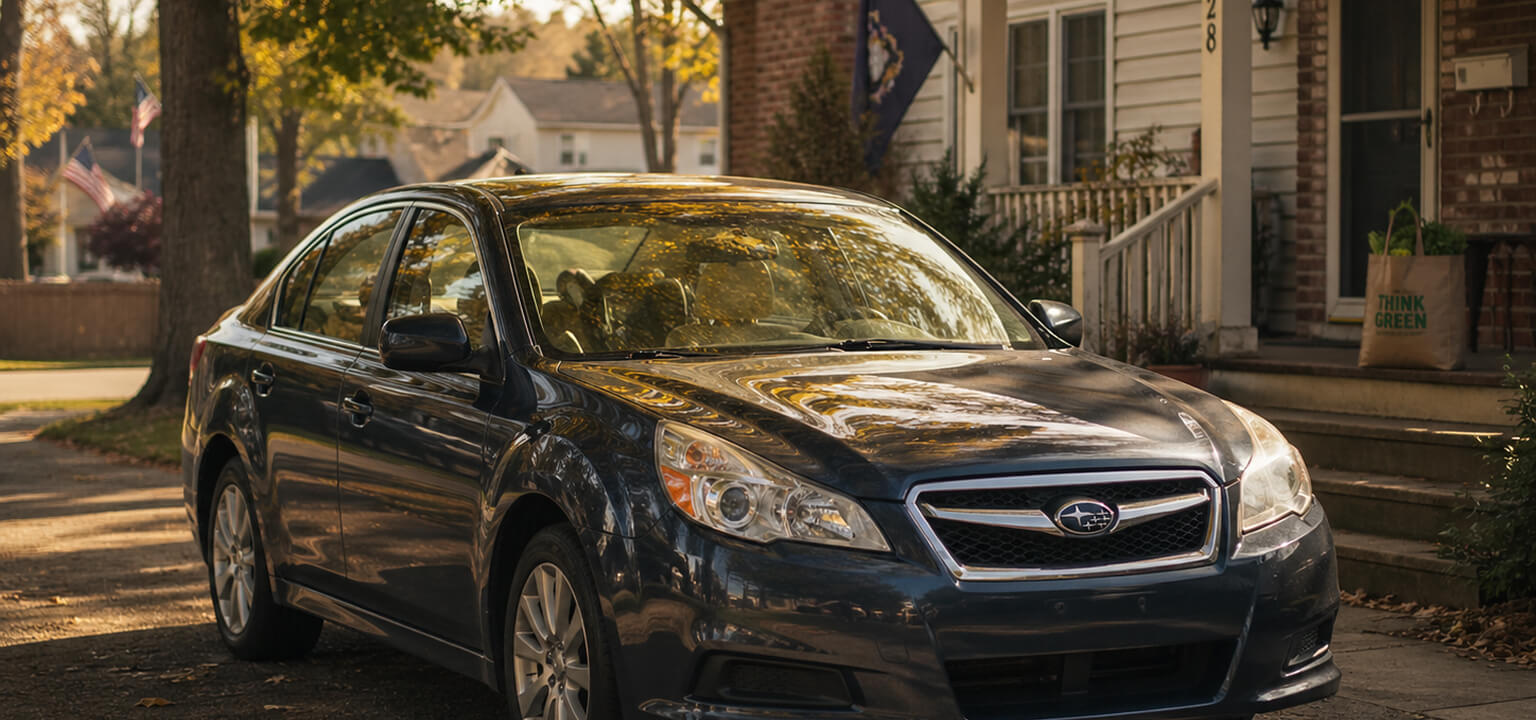
You owe $18,000 on a car that would sell tomorrow for $9,000. You keep paying because you need the car to get to work, and you already feel stuck. In a Chapter 13 bankruptcy, federal law may let you pay only what the car is actually worth, not what the contract says you owe.
That process has a name. It is called a cramdown. It is one of the most powerful tools in the Bankruptcy Code for homeowners, commuters, and small business owners who are watching a loan balance outrun the asset it financed. This guide explains how a cramdown works, who qualifies under the 910-day rule, and what it can do for your Chapter 13 payment.
If you have been quietly writing off the gap between your loan and your car’s value as a permanent loss, keep reading. The math may be more forgiving than you think.
What Is a Cramdown, Exactly?
A cramdown is a Chapter 13 mechanism that reduces a secured loan to the current value of the property that secures it. The portion of the debt above the collateral’s value is reclassified as general unsecured debt and treated the same way your credit card balances and medical bills are treated in your repayment plan.
Here is the structure in plain terms. Say your car is worth $9,000 and your loan balance is $18,000. A cramdown splits that loan in two. The first $9,000 becomes a secured claim that must be paid in full through your three to five year plan. The remaining $9,000 becomes an unsecured claim that joins the pool with your other unsecured debts and is paid pro rata alongside them. When your case is successfully completed, any unpaid portion of that unsecured balance is typically discharged with the rest of your unsecured debt.
This tool is unique to Chapter 13. In Chapter 7, secured lenders generally insist on reaffirmation at the original contract terms, which means you either sign up for the full balance or surrender the collateral. Chapter 13 is different because the law allows the court to modify most secured claims as part of an approved repayment plan. The U.S. Courts overview of Chapter 13 explains the broader framework: the debtor proposes a plan, the court confirms it, and creditors are bound by its terms.
The practical effect of a cramdown is that you stop paying for value that no longer exists. You pay for the car you actually own, at a fair interest rate, over a schedule that fits your household budget.
The 910-Day Rule: Why the Age of Your Loan Matters
Congress added an important limitation on vehicle cramdowns in 2005 when it passed the Bankruptcy Abuse Prevention and Consumer Protection Act. That limitation, codified in a provision at the end of 11 U.S.C. §1325(a), is known as the hanging paragraph, and it introduced what bankruptcy practitioners now call the 910-day rule.
The rule is straightforward. If all three conditions below apply to your car loan, the loan cannot be crammed down to the vehicle’s value. The full contract balance must be paid through the plan, at least as a secured claim:
- The lender holds a purchase-money security interest in the vehicle (the loan was used to buy that specific car)
- The loan was incurred within 910 days of your bankruptcy filing (roughly two and a half years)
- The vehicle was acquired for your personal use
If any one of those three prongs fails, the 910-day rule does not apply and cramdown becomes available. That is why the age of the loan is the first question an experienced Chapter 13 attorney asks when a client brings in car paperwork.
Loans older than 910 days are the sweet spot for cramdown. A vehicle you financed three years ago, four years ago, or longer has usually depreciated significantly while your balance has barely moved. The deeper you are into the life of that loan, the larger the gap cramdown can close.
Two common exceptions also open the door. First, refinances and cash-out refinances generally destroy the purchase-money character of the original loan. Once that happens, many courts treat the debt as outside the 910-day protection regardless of when the refinance occurred. Second, a vehicle acquired primarily for business use, rather than personal use, can fall outside the rule even if it is newer than 910 days. Courts apply a totality-of-the-circumstances test to sort business from personal use, and the answer turns on facts specific to your situation.
Pull your loan documents. If the original purchase date is more than two years and six months before today, there is a good chance the 910-day rule does not block cramdown for you. If the loan was refinanced, the picture usually improves. We will verify everything when you come in.
How Cramdown Changes Your Chapter 13 Plan Payment
Cramdown reshapes a Chapter 13 plan in two compounding ways: it reduces the secured principal you must pay through the plan, and it often lowers the interest rate your lender receives on that secured balance.
The interest rate side: the Till rate
In its 2004 decision in Till v. SCS Credit Corp., the United States Supreme Court held that the interest rate a Chapter 13 debtor must pay on a secured claim is not the original contract rate. Instead, courts use a prime-plus formula. The starting point is the national prime rate on the filing date, with an upward adjustment (generally one to three percent) to account for the risk of nonpayment.
For a subprime auto loan carrying an interest rate in the mid-teens or higher, the Till rate is almost always a substantial reduction. The savings on interest alone, spread across a five year plan, can reach thousands of dollars even before any principal reduction.
A real-world walkthrough
Consider a typical scenario for a Central Pennsylvania commuter:
- Original loan balance at filing: $18,000
- Current fair market value of the vehicle: $9,000
- Contract interest rate: 14.5%
- Loan age: 1,050 days (past the 910-day threshold)
Under the old contract, the monthly payment is roughly $480 and the remaining interest cost over the life of the loan is substantial. After a successful cramdown, the secured claim drops to $9,000. The interest rate drops to a Till rate, for example, prime plus two percent. The $9,000 of unsecured deficiency joins the general unsecured pool. Depending on the plan structure, the new secured car payment can land several hundred dollars lower per month, and the unsecured deficiency is repaid only to the extent the plan can afford.
Numbers will vary with your specific income, expenses, and trustee practices in the Middle District or Eastern District of Pennsylvania. Our bankruptcy calculator can help you start to visualize whether your household budget has room for a Chapter 13 plan and what a reduced car payment might look like inside it.
Cramdown on Other Collateral
Cramdown is not limited to cars. The same general principle applies to several other categories of secured debt, each with its own timing rule.
Investment real estate
Mortgages on rental properties, vacation homes, and other real estate that is not your principal residence can be crammed down in Chapter 13. If you own a duplex with a $220,000 mortgage on a property now worth $160,000, the secured claim can be reduced to the current value. The $60,000 deficiency joins general unsecured debt. This is a meaningful tool for landlords caught on the wrong side of a market shift, and it is one of the reasons Chapter 13 is often the right choice for property owners, not just wage earners.
Boats, RVs, and motorcycles
Recreational vehicles financed for personal use sit in an interesting category. Because the hanging paragraph’s 910-day rule is written specifically for motor vehicles acquired for personal use, courts have had to decide which recreational vehicles fall inside and outside of that definition. RVs titled as motor vehicles under state law are often treated the same as cars. Boats and motorcycles have been handled in different ways depending on the court. Your attorney will research how the specific asset is classified in your case.
Furniture, appliances, and other personal property
For personal property other than vehicles, the cramdown restriction is shorter: a one-year look-back. If a furniture loan, appliance loan, or other secured personal property loan was incurred more than one year before filing, that loan can typically be crammed down to the current value of the collateral. For older store-credit obligations and in-store financing agreements, the savings can be dramatic.
When Cramdown Does Not Apply
Cramdown is a powerful tool, but it has firm limits. Understanding where the limits fall helps set realistic expectations from the first consultation.
- Your principal residence mortgage. The Bankruptcy Code specifically protects mortgages on the debtor’s primary residence from modification. You cannot cram down the mortgage on the home you live in. Chapter 13 offers other powerful tools for homeowners, such as curing arrears over the life of the plan and stopping a sheriff sale, but principal reduction is not one of them.
- Vehicles purchased within 910 days for personal use. As discussed above, loans that meet all three prongs of the hanging paragraph must be paid at the full contract balance as secured claims. The interest rate can still be reduced to the Till rate, which is its own meaningful savings, but the principal stands.
- Recent purchase-money loans on other personal property. The one-year look-back for non-vehicle personal property applies the same logic. Loans taken out within the year before filing generally cannot be crammed down.
- Unsecured debt. Cramdown applies to secured claims. Credit cards, medical bills, and personal loans without collateral are already unsecured and are treated through the general unsecured pool in your plan.
There is a common misconception that being stuck in a recent car loan means you have no options. That is not accurate. Even when cramdown on principal is off the table because of the 910-day rule, the Till rate alone can change the math meaningfully, and other parts of Chapter 13 (the automatic stay, the structured plan, and the discharge of unsecured debt) continue to work for you.
The Role of Valuation: What Is Your Car Actually Worth?
Cramdown stands or falls on the valuation of the collateral. If the court sets the secured claim too high, the benefit evaporates. If it is set fairly, you win back real money. This is where evidence matters.
Common valuation sources for vehicles include the NADA Used Car Guide, Kelley Blue Book, and Edmunds. Each produces different numbers for the same car, and courts are familiar with the differences. The Supreme Court’s decision in Associates Commercial Corp. v. Rash established that the proper measure is typically the replacement value, reflecting the price a retail purchaser would pay for a like vehicle, with adjustments for condition.
Expect the creditor to push back. Lenders routinely file proofs of claim asserting higher values than debtors propose. A strong valuation file typically includes the guide printouts, dated photographs of the vehicle’s actual condition, maintenance records, a mileage statement, and documentation of any known defects (transmission work pending, body damage, tire replacement needed).
The trustee may also weigh in, particularly in contested cases. An attorney who regularly files Chapter 13 cases in the Middle District and Eastern District of Pennsylvania will know the valuation norms each trustee applies and will build a file that anticipates objections rather than reacting to them.
Why This Matters for Your Fresh Start
The strategic point of a cramdown is not only the dollars saved, although those are substantial. It is the shape of the life you walk out of Chapter 13 with.
A successful cramdown means you complete your plan with a paid-off vehicle that is titled in your name, free of the old contract, and worth roughly what you paid for it through the plan. You finish Chapter 13 without the anchor of a loan that was dragging your balance sheet underwater. You also finish with your unsecured debt discharged and your credit on a clear path to rebuild.
For Central Pennsylvania households where a reliable car is not optional (because the job, the kids’ school, and the medical appointments are spread across Dauphin, Cumberland, Lancaster, and York counties) that outcome is not a luxury. It is the foundation of the fresh start Chapter 13 is supposed to deliver.
See If Your Car Qualifies for Cramdown
Cramdown questions are answered in about fifteen minutes with the right documents in front of us. Bring your loan papers, the current payoff amount, the year, make, model, and mileage of your vehicle, and your most recent statement. We will tell you whether the 910-day rule is a factor, what a realistic valuation looks like, and how a cramdown would fit inside a Chapter 13 plan designed for your income.
Consultations are free. We meet in person at any of our seven Central Pennsylvania offices, by phone, or online. For broader context on how Chapter 13 works together with asset protection, our Chapter 13 guide for Central Pennsylvania homeowners walks through the plan-confirmation process and the tools Chapter 13 puts in your hands.
Frequently Asked Questions
No. Cramdown is a Chapter 13 tool. In Chapter 7, a secured lender generally requires you to either reaffirm the loan at the original contract terms or surrender the vehicle. If your main goal is reducing the principal on a car loan, Chapter 13 is the chapter that makes that possible.
The 910-day rule, also called the hanging paragraph, is a provision at the end of 11 U.S.C. §1325(a). It says that if your car loan is a purchase-money loan, was incurred within 910 days before filing (about two and a half years), and the vehicle is for personal use, the loan cannot be crammed down to the car’s value. The full contract principal must be paid through your plan as a secured claim.
Yes. Even when the 910-day rule prevents a principal reduction, the interest rate on the secured claim can typically be reset to the Till rate (the national prime rate plus a risk adjustment of one to three percent). For a high-interest subprime auto loan, that rate reset alone can save thousands of dollars over a five year plan.
Not to the mortgage on your principal residence. The Bankruptcy Code specifically prohibits modifying mortgages secured only by the debtor’s primary home. However, cramdown does apply to mortgages on investment properties, vacation homes, and other non-principal-residence real estate.
Courts typically look at replacement value using guides like NADA or Kelley Blue Book, adjusted for the specific condition of your vehicle. The Supreme Court’s Rash decision established that the measure is generally what a retail purchaser would pay for a comparable vehicle. Dated photos, maintenance records, and documentation of defects strengthen your valuation position.
Possibly. The 910-day rule applies only to vehicles acquired for personal use. Courts apply a totality-of-the-circumstances test to distinguish personal from business use. A vehicle used primarily as a work truck, delivery vehicle, or rideshare car may fall outside the rule. The outcome is fact-specific, and good documentation of business use matters.
The same as any Chapter 13 plan: three to five years, depending on your income relative to the Pennsylvania median. The crammed-down secured claim must generally be paid in full within the plan’s life. Longer plans give the crammed-down payment more room in the monthly budget, which can help feasibility.
Court filing fees and attorney fees vary by case and district. In Chapter 13 cases, attorney fees are often paid through the plan itself rather than upfront. At the Law Offices of John M. Hyams, the initial consultation is free and includes a clear explanation of what the case would cost and how those costs would be structured within your plan.